
Programming
(2–6 months)
/ What Happens During the Development Stage?
/ Key Activities During the Development Stage
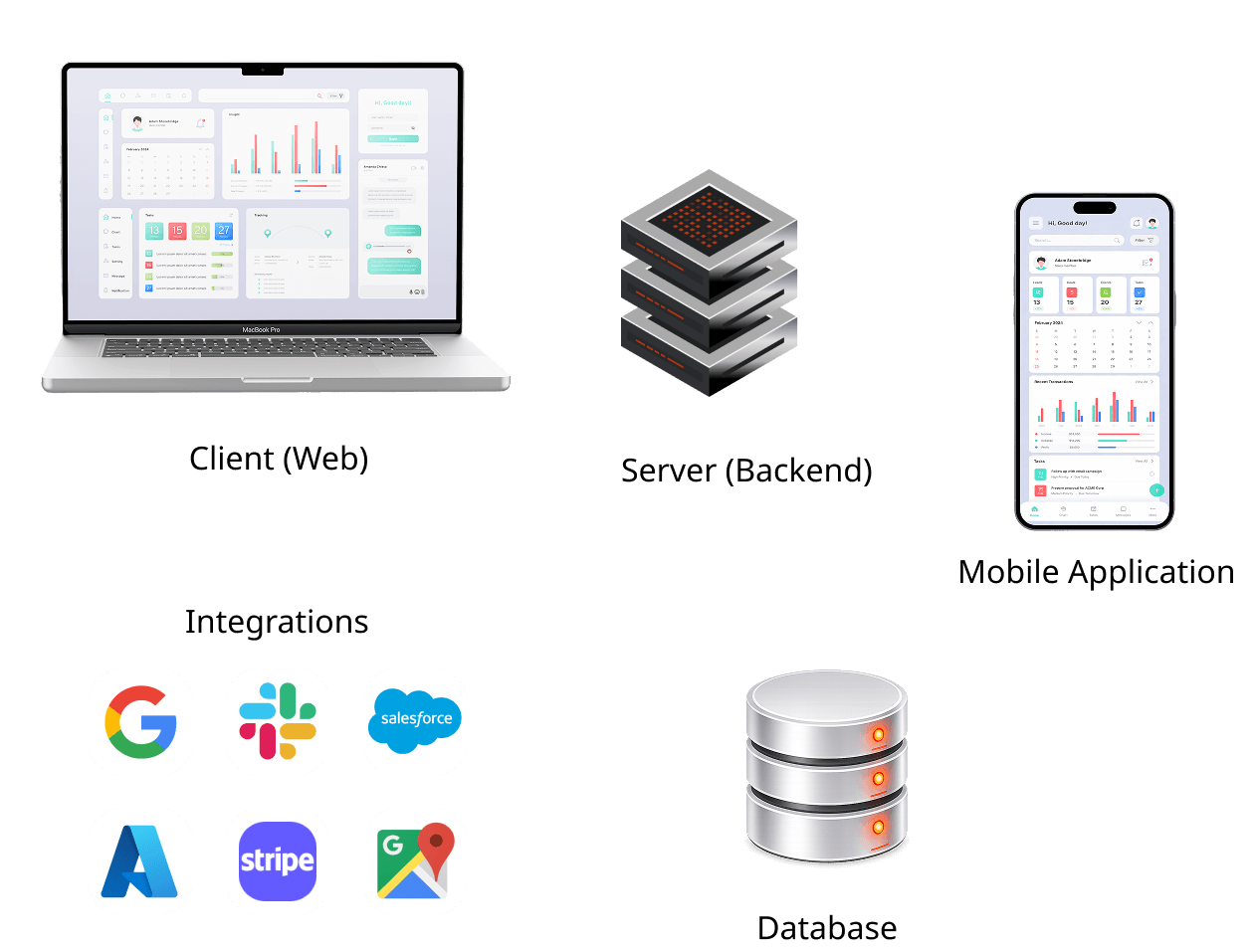


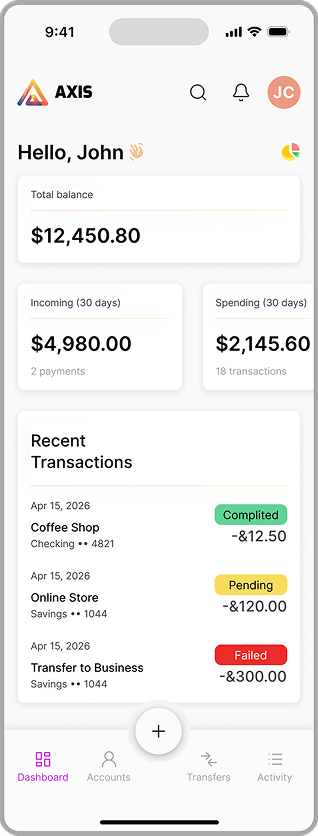
We develop the client and server parts of the product
Frontend, backend, mobile parts – everything is created in accordance with the approved architecture.

We implement the agreed functionality
We strictly adhere to approved requirements to avoid unnecessary rework and budget overruns.








We integrate third-party services and APIs
We integrate payment systems, CRM, external platforms, maps, notifications, and other tools necessary for the product's operation.
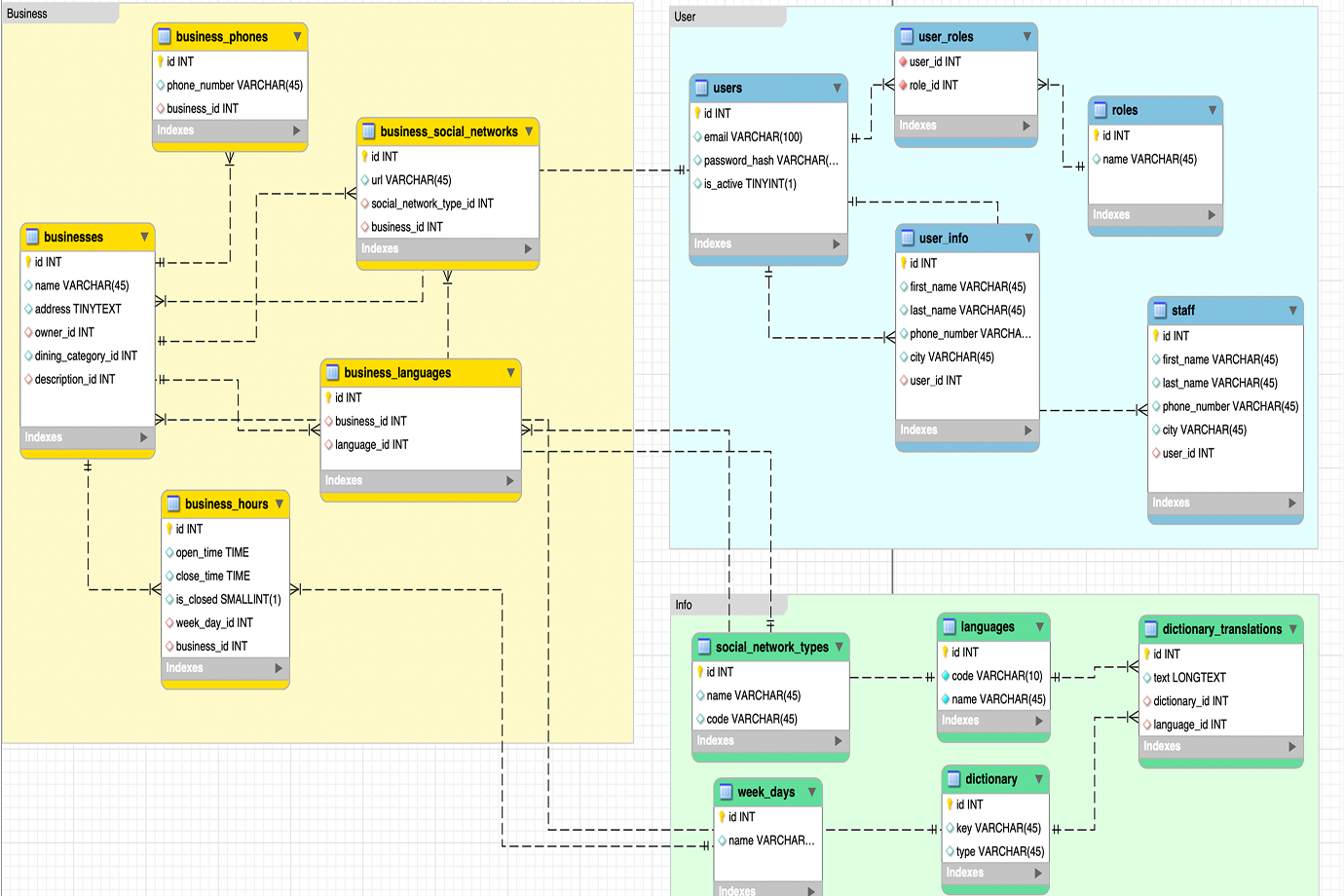
Designing a database architecture
We create a reliable data storage structure that ensures scalability and stability into the future.
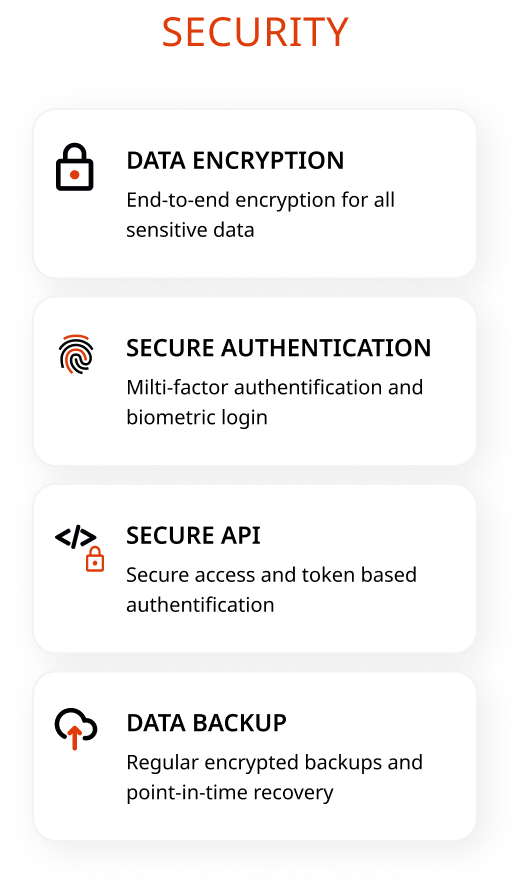
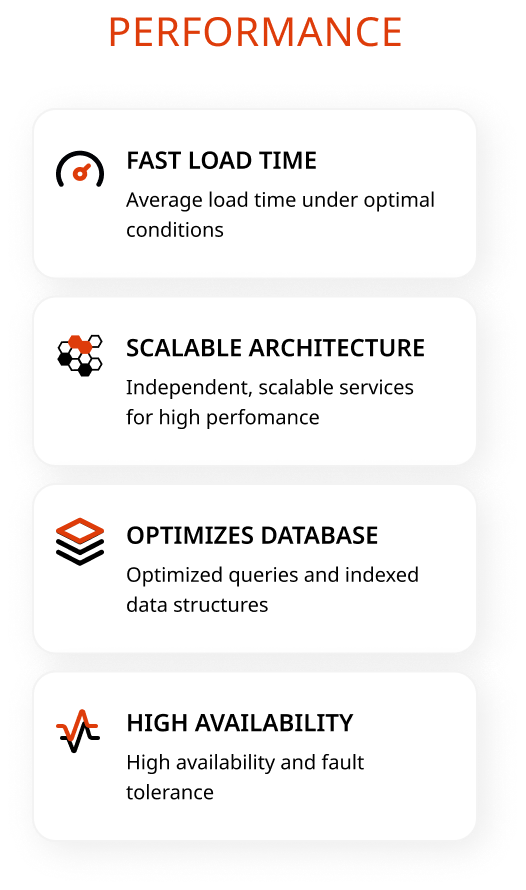
We ensure security and productivity
Data protection, load resilience, and stable operation are all built into the architecture.
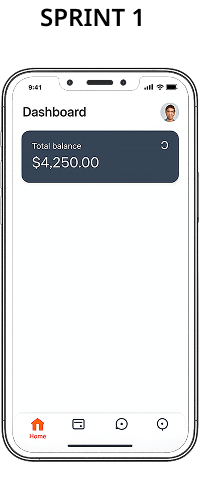
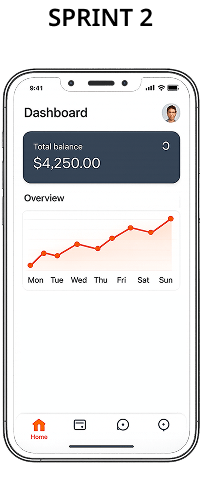
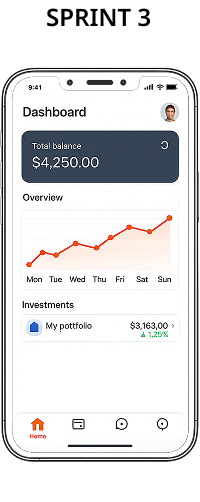
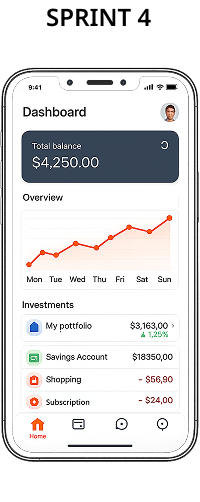
We work in sprints
Development is carried out in stages. You regularly see interim results and understand the project's dynamics.
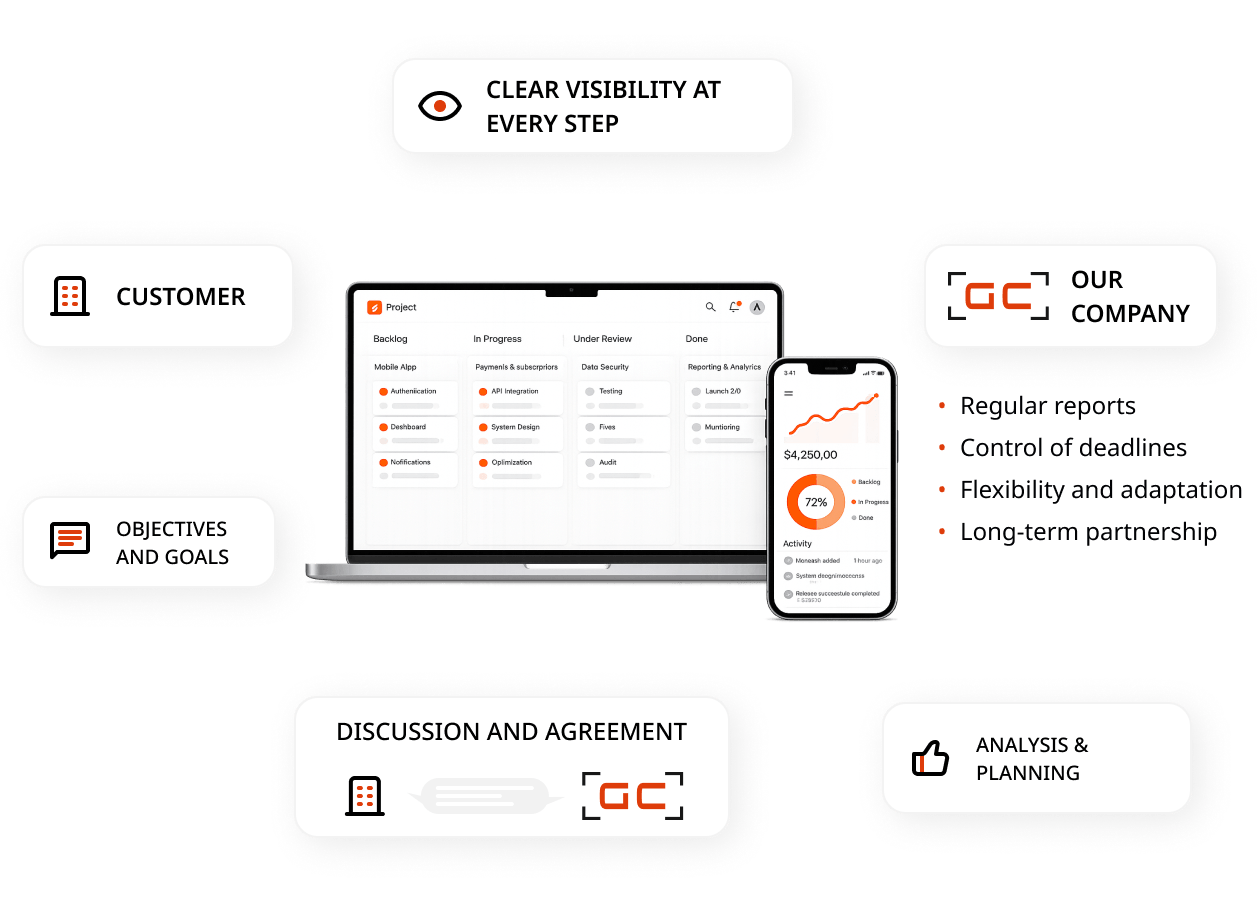




We maintain constant communication
We communicate with you systematically and transparently: we demonstrate progress, coordinate decisions, and promptly respond to questions.
/ How is the process organized?
- The code undergoes internal quality control
- The work is structured in sprints with clear tasks and deadlines
- All changes are subject to approval
- Developers work in collaboration with designers and analysts
/ Key benefits for the client
Transparency
You always understand what stage the project is at.
Predictability of deadlines
Development is proceeding according to the approved plan.
Budget control
No chaotic modifications or hidden costs.
Minimizing risks
Thanks to the pre-designed architecture.
Scalability
The product is ready for growth and development.
Guarantee of compliance with design and requirements
You receive a fully developed product, ready for testing and final quality checks before launch.
If you want to see the foundation upon which the development was built and how the visual and user experience were shaped, you can return to the previous stage — 3. Design and Prototyping, where an interactive model is created and the interface of the future product is detailed.
Now that all the functionality has been implemented, the architecture has been built, and the product has become a fully functional system, we move on to the next stage — 5. Internal Testing (QA), where the solution undergoes a comprehensive check for stability, security, and compliance before launch.